Author:
Franz Nahrada / Gabriele Markovic
Short summary:
Over 200 young people from four countries are shaping the future along the Mur. The “Mura Calling” action day in Bad Radkersburg showcases a new form of cross-border cooperation.

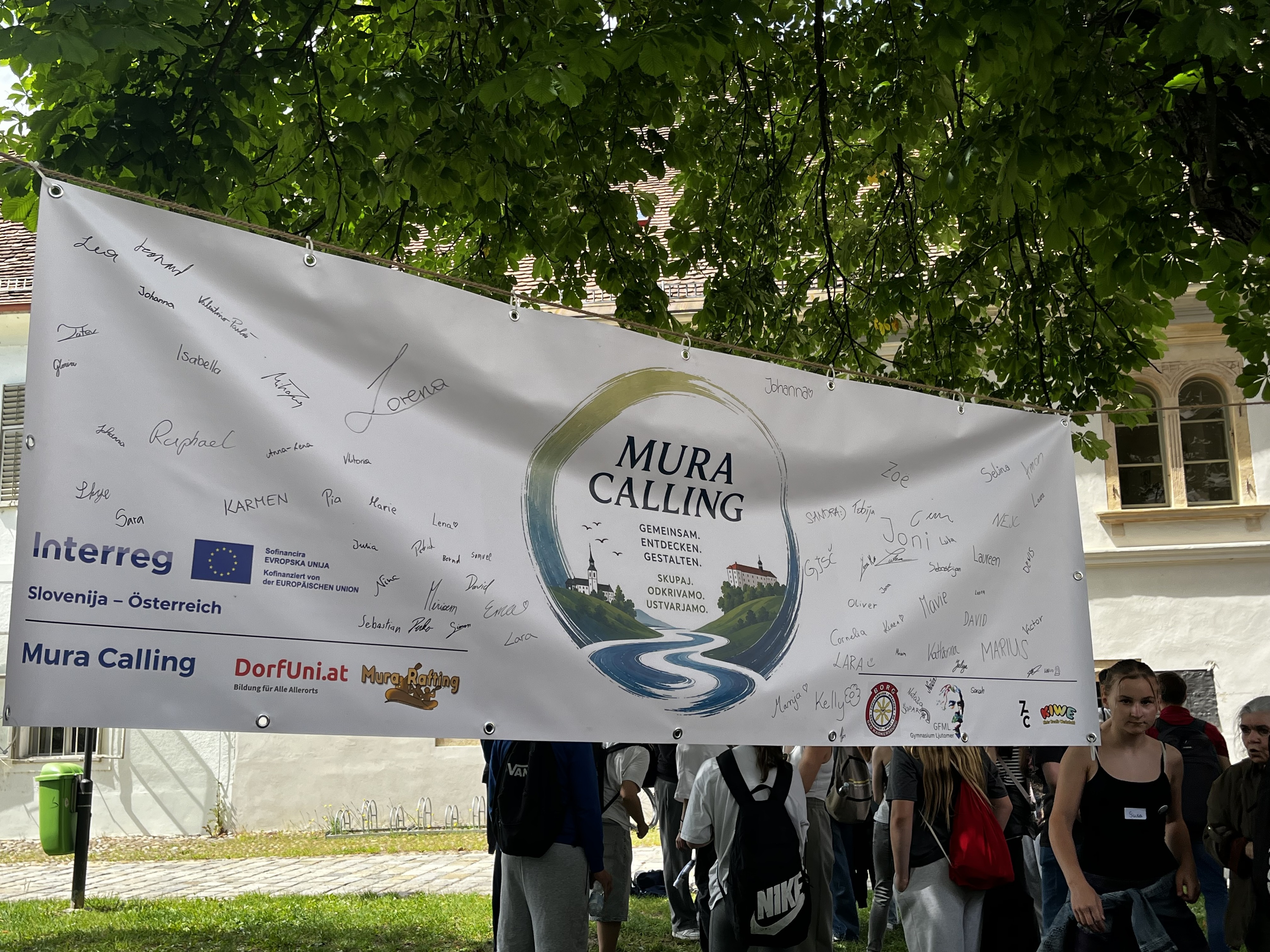
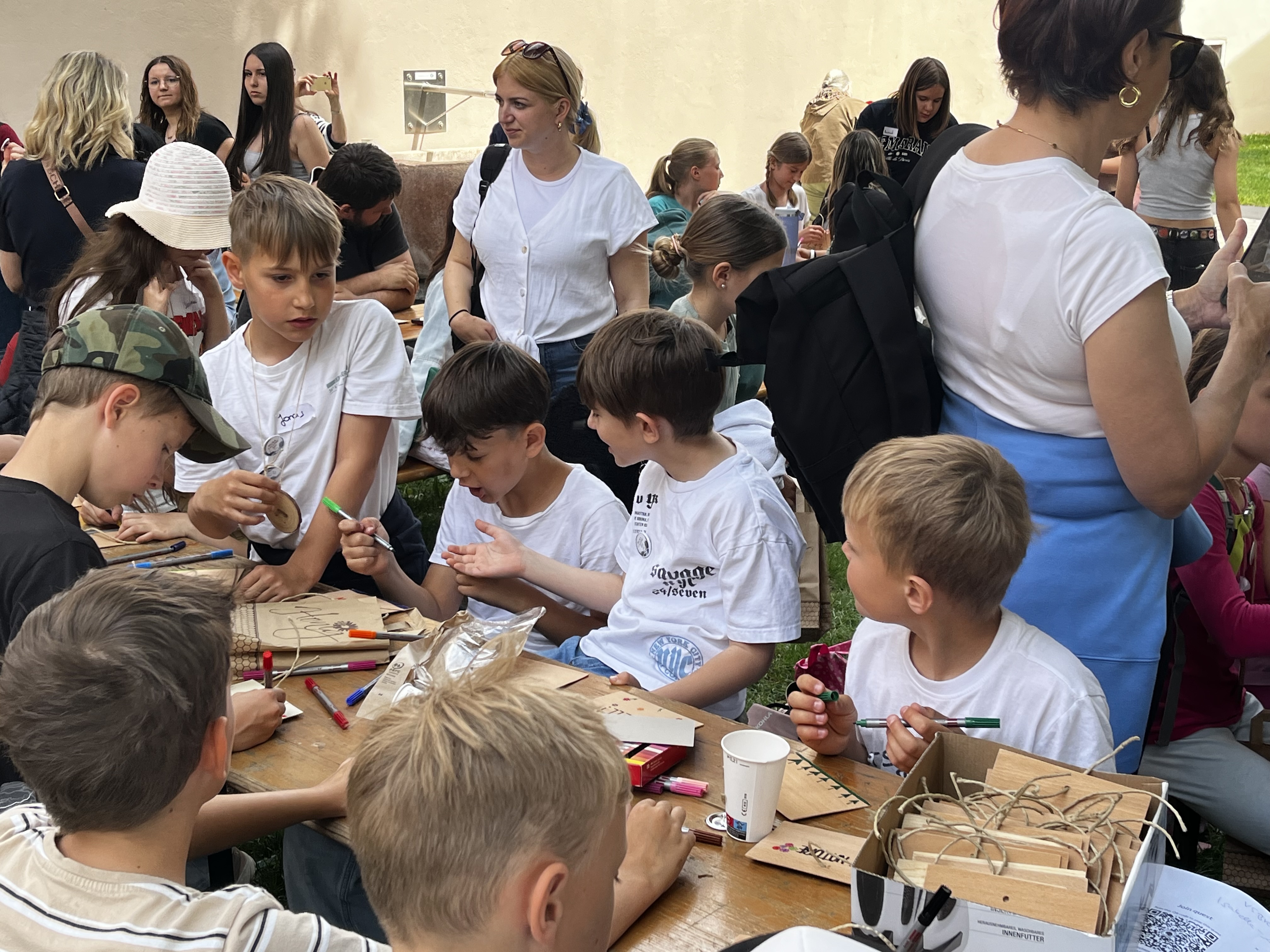
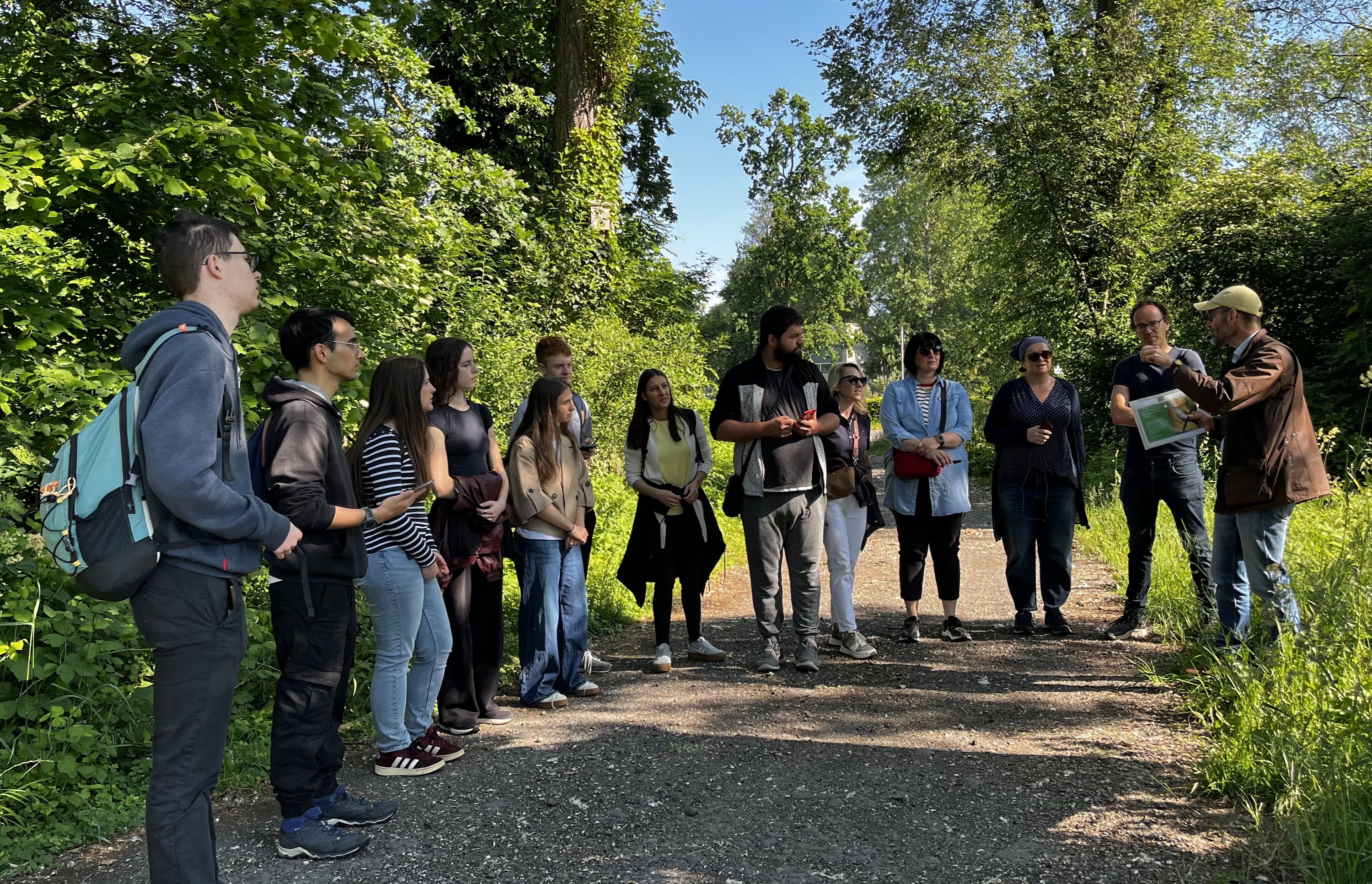
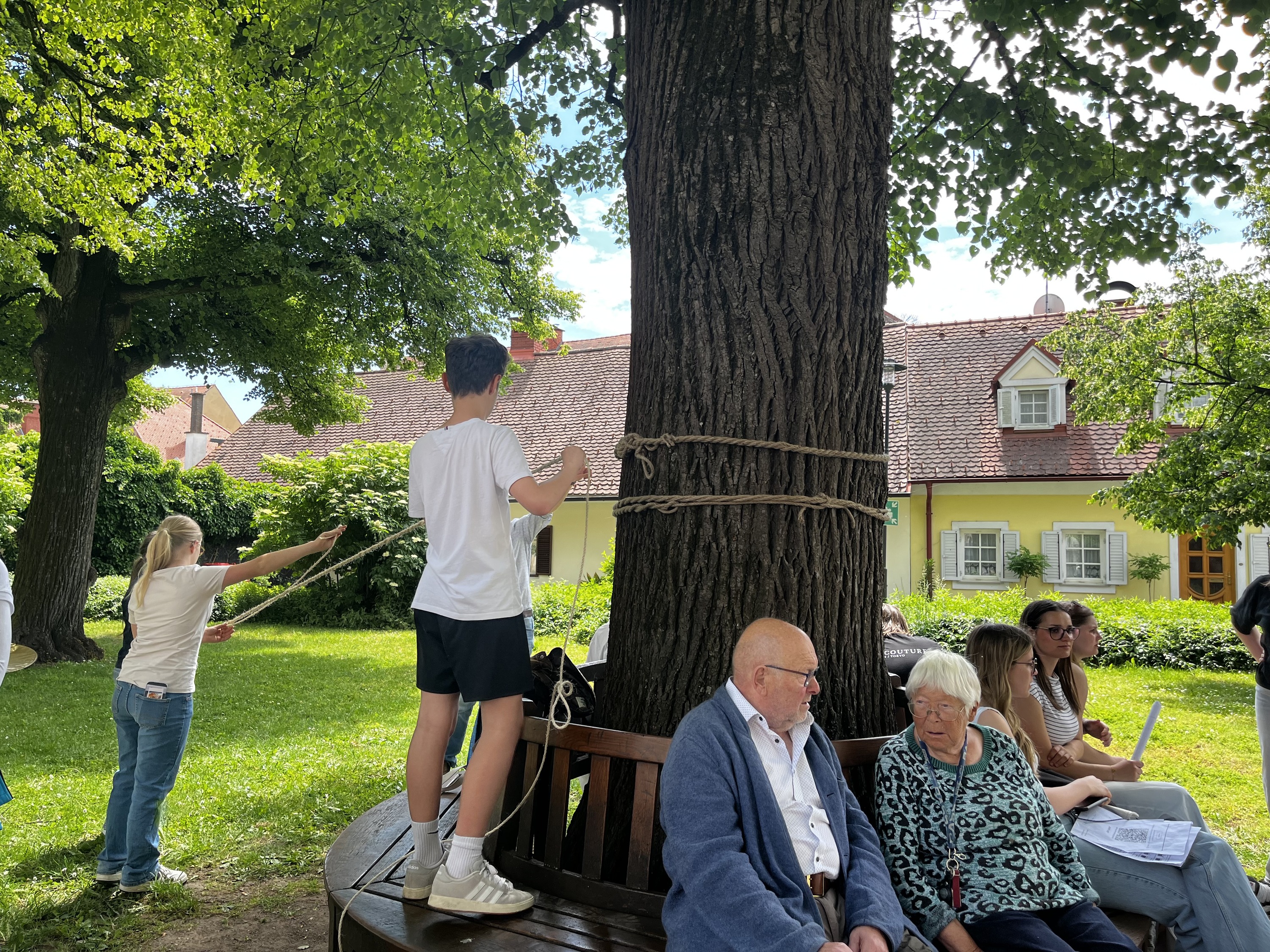
Bad Radkersburg, May 20, 2026 – More than 200 children and young people from Austria, Slovenia, Hungary, and Croatia have transformed Bad Radkersburg into a vibrant, cross-border classroom. During the action day of the Mura Calling project, the shared biosphere area along the Mur River was not only explored—but also experienced as a shared space for the future.
Eight schools from the region—including BORG and iHTL Radkersburg, Gymnasium Ljutomer, as well as elementary and middle schools from Bad Radkersburg, Gornja Radgona, and Apače—worked together with international partners on an unconventional learning format: out of the classroom, into the landscape, the city, and made new encounters.
Learning that brings people together
In mixed-ability groups, the students explored nature, culture, and regional context along various learning routes. The method of place-based learning was enhanced with Green Steps ARK—an app that helps schools seamlessly extend the learning space from the classroom into the school environment. This approach proved viable even under real-world conditions with a large number of participants—at the same time, it generated valuable ideas for further development.
The active role of the older students was particularly striking: they took on the responsibility of serving as guides, supported the younger participants, and played a key role in shaping the program—a visible sign of learning in action on an equal footing. This school-wide initiative was made possible by the extraordinary commitment of BORG professor Nina Voglmeir. The presence of BORG director Hannes Schuster further underscored this.
Moving moments and powerful images
A special highlight was the performance “Raus aus dem Schneckenhaus” (“Out of the Shell”) featuring kindergartners from Austria and Slovenia—a moving, intergenerational experience that powerfully brought the spirit of the project to life.
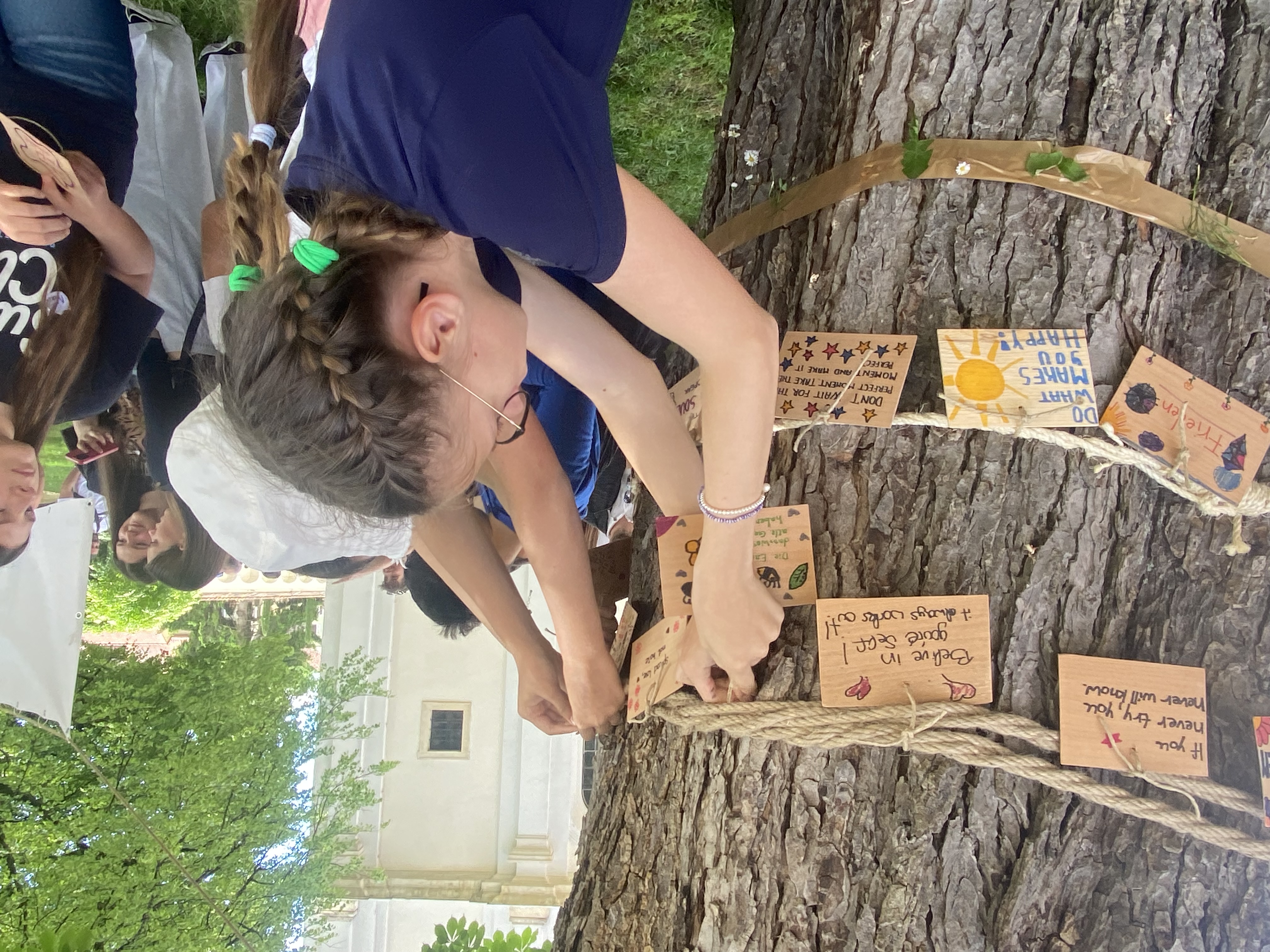
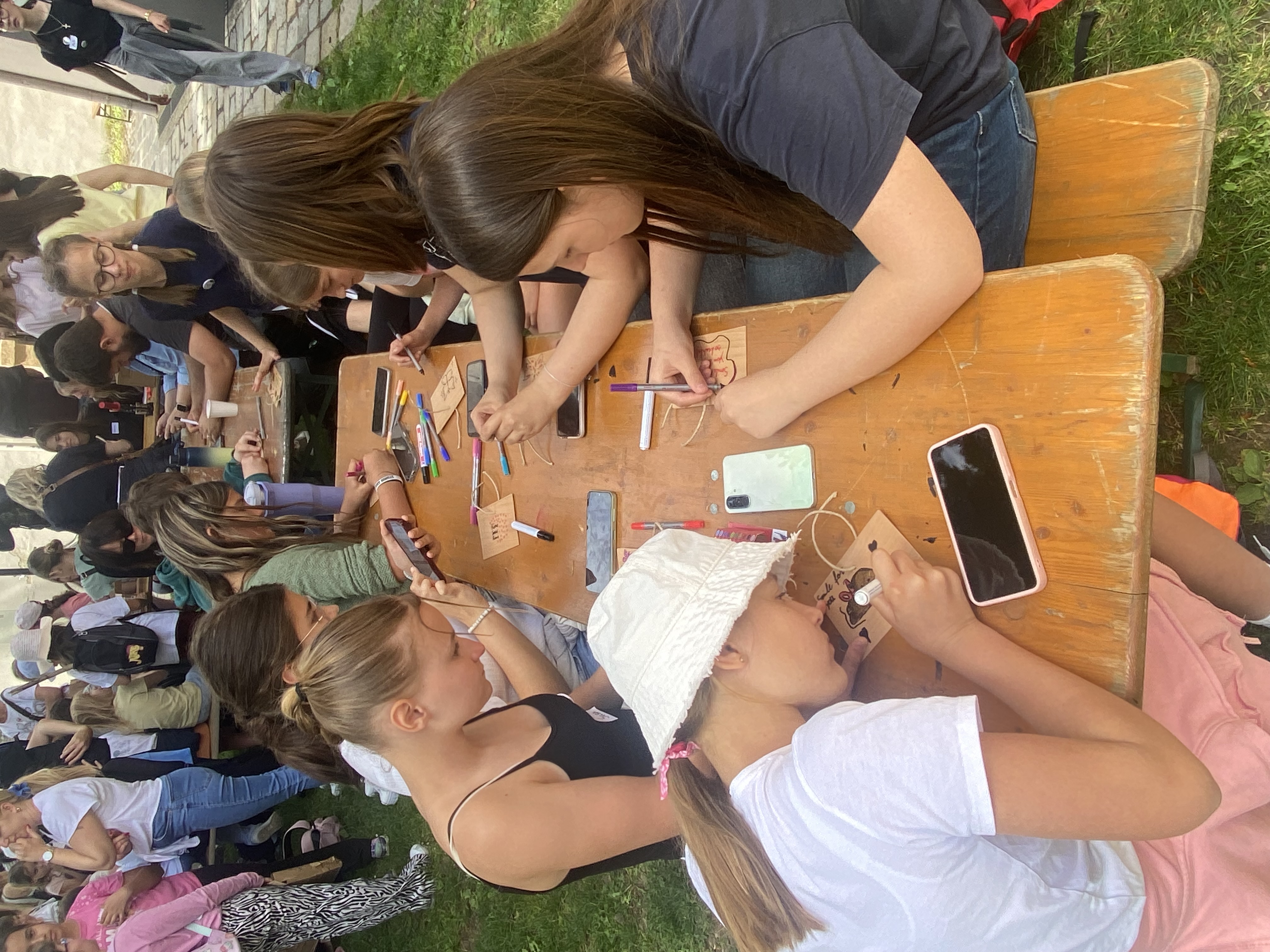
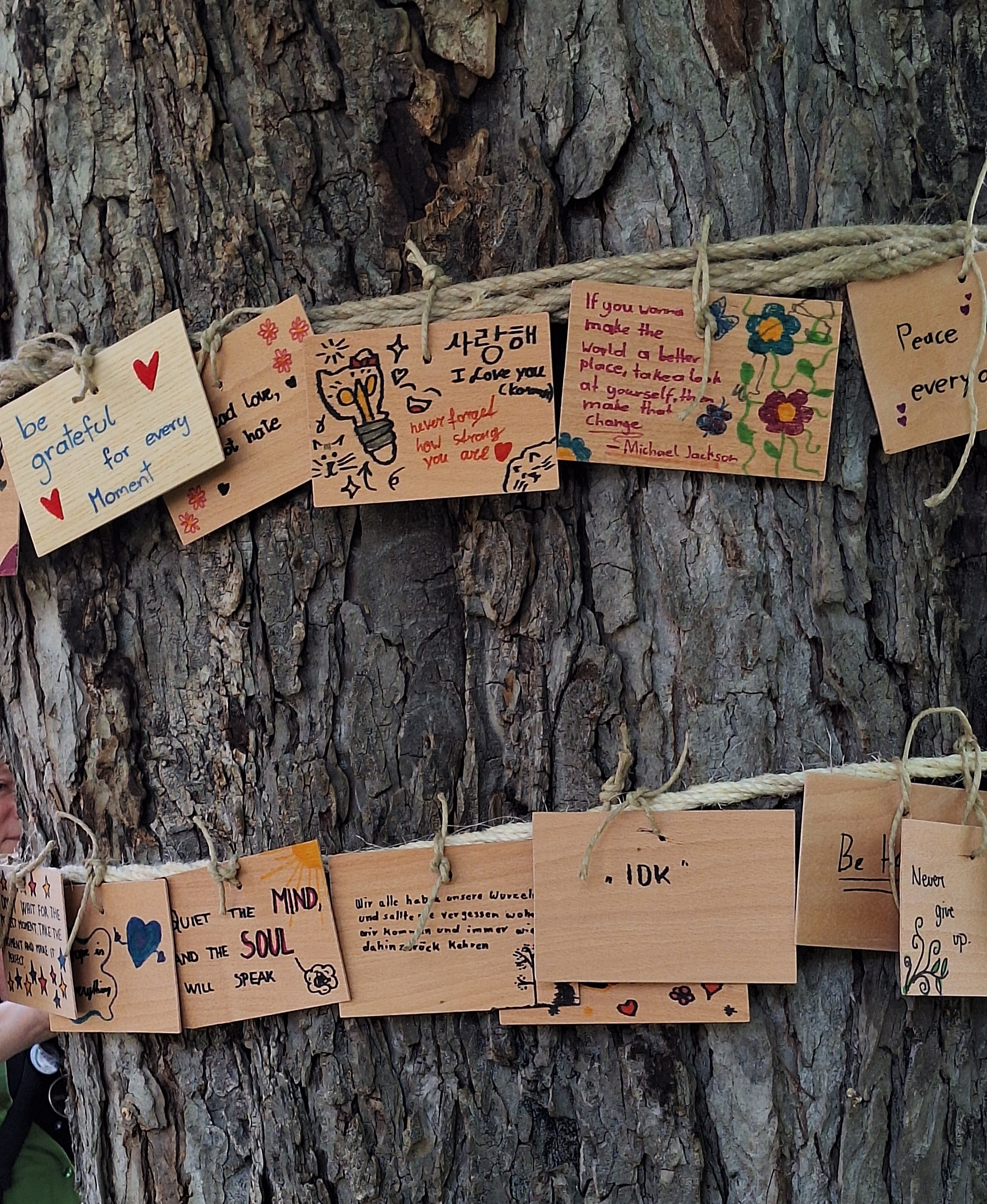
At Frauenplatz, the energy of the day reached its peak: children and young people shared their impressions and wrote down their wishes for the future of the biosphere reserve on wooden boards. The diversity of the messages—from “Peace for everyone” to “Be grateful for every moment”—was also reflected in the linguistic diversity: from German and Slovenian to Italian and Chinese. Alongside the project, Niklas Sieger from BORG ensured that the children and young people had their say.
Bright sunshine, spontaneous encounters between different age groups, and the commitment of regional stakeholders—from the local pastry shop to the hunting conservation association—made the day a communal experience far beyond the school setting.
Civil Society as a Driving Force
The day of action clearly demonstrated that cross-border cooperation does not arise solely at the institutional level, but is driven by the involvement of schools, organizations, and dedicated individuals.
Public figures—including First Deputy Mayor Julia Paar, Regional Manager Michael Fend, and Biosphere Park Manager Andreas Schuster—also emphasized in their remarks the importance of such initiatives for regional development.
Michael Fend emphasized that such developments “cannot be planned and decided by a few people in an office” and thanked the initiative, quoting a wooden sign: “If you don’t try, you never know”! Julia Paar also thanked the organizers and said, “You can feel the energy when you walk in here.”
A Start to Something More
It became clear, at the very latest during the closing discussion at the Pavelhaus, that this day was more than just a one-time event: representatives from four countries discussed concrete next steps for the project’s further development. Networking efforts—both between schools and between communities—were on the agenda.
A new joint initiative along the Mur is already in the works—a cross-border gathering downstream in early summer, organized by the Slovenian project partner Mura Rafting.
Europe on a small scale – a future taking shape
Mura Calling highlights what becomes possible when young people learn early on to view their region as a shared space. The enthusiasm and openness of the participants show that the foundations for long-term, cooperative development in the biosphere reserve are in place.
What began in Bad Radkersburg could have an impact far beyond the region.
Further information:
- Interview on Slovenian radio Maribor: https://radiosi.rtvslo.si/podcast/radio-si-exclusive/173251895/175224403
- Project report on researchgate: https://www.researchgate.net/publication/398573053_Skalierung_bioregionaler_Identitaten_im_5-Lander_Biospharenpark_Mura-Drava-Duna
- Scaling place-based learning through a networked game: https://www.researchgate.net/publication/379669944_Scaling_Place-Based_Education_Through_a_Networked_Game
- The Mobile Campus 4.0 as a municipal education strategy for climate adaptation: https://www.researchgate.net/publication/372459745_How_can_gamified_environmental_education_support_municipal_efforts_in_dealing_with_the_climate_crisis_Synergies_between_the_Green_Steps_Mobile_Campus_40_and_the_Climate_Frame_Strategy_of_Sankt_Polten_
Interested to start a nature learning space in your town or school?
https://ark.greensteps.me/page/create-community/
https://ark.greensteps.me/page/commons-mentor/
